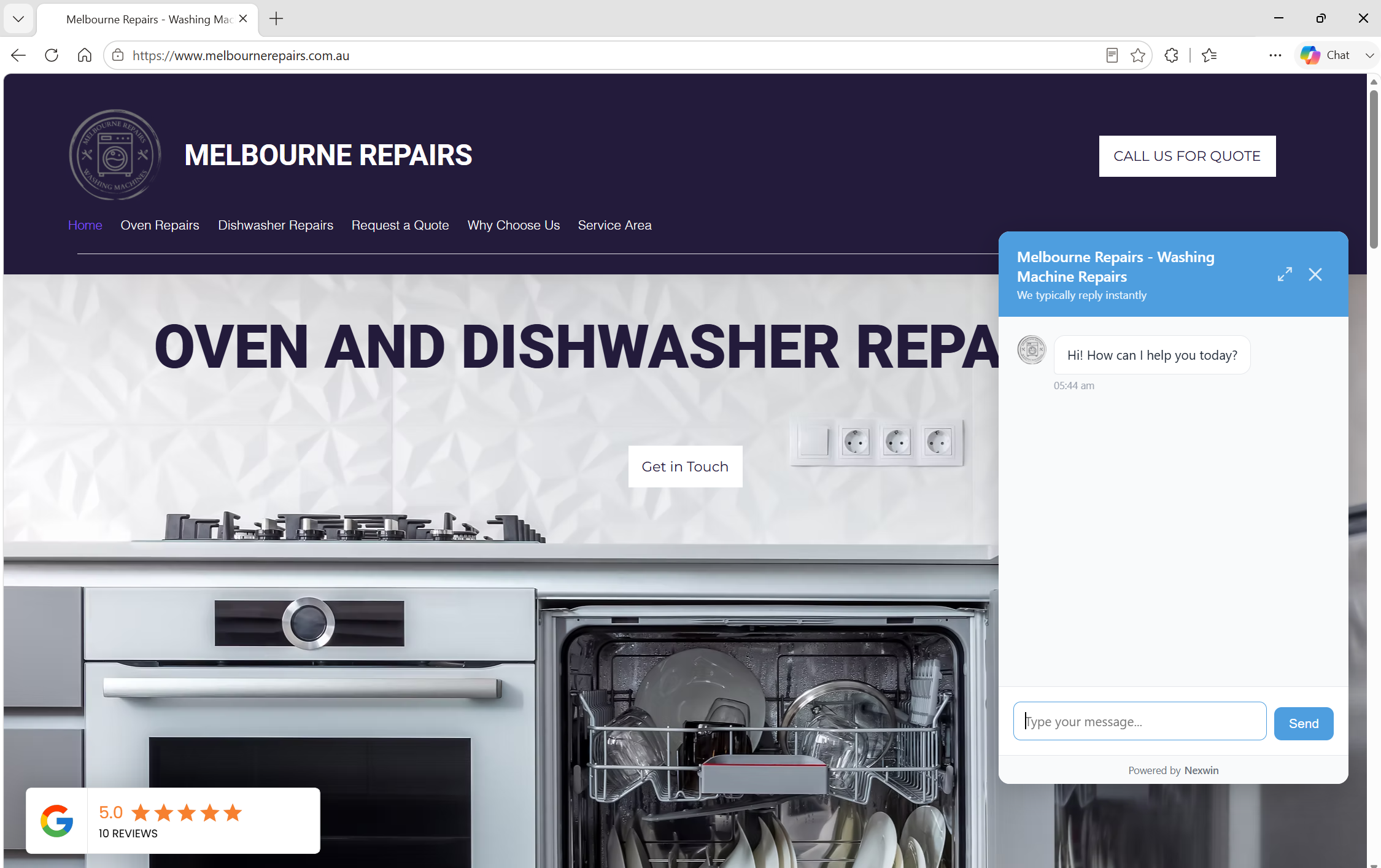
Trade business · Melbourne
Melbourne Repairs
Five months in operation and approximately 60 monthly calls, with the configured workflow handling job intake, service-area checks, suitable appointment times, bookings and rescheduling.
Customer case studies
These customer stories show configured Nexwin workflows in real Australian businesses. They explain what the AI handles, where integrations are used and when a person remains responsible.
Trade business · Melbourne
Five months in operation and approximately 60 monthly calls, with the configured workflow handling job intake, service-area checks, suitable appointment times, bookings and rescheduling.
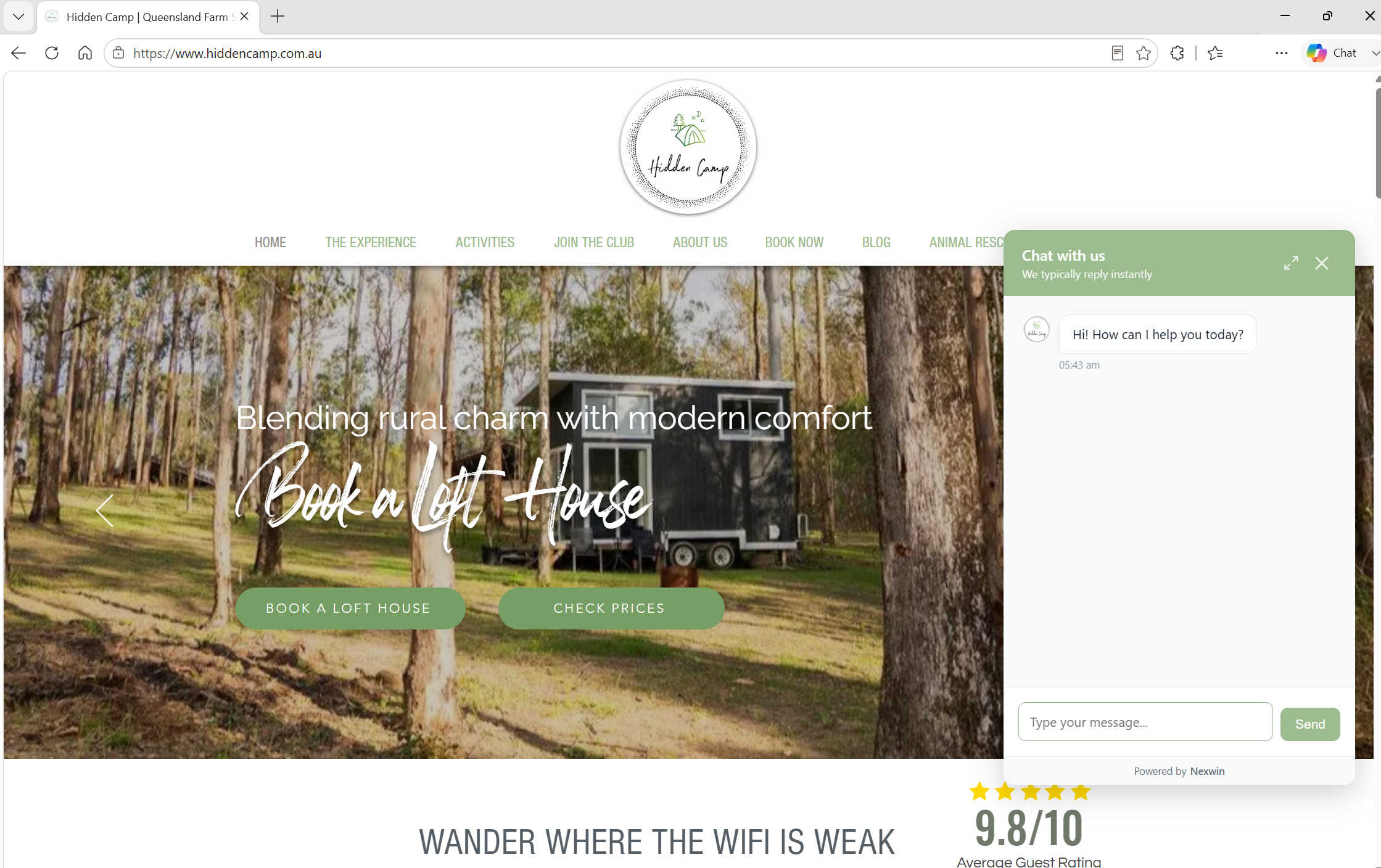
Accommodation · Queensland
Six months in operation, with phone and website support for guest questions, Tiny Away availability checks, eligible campsite bookings and approved late-arrival information.
Operational figures are approximate and were supplied by each customer. Results depend on call volume, configuration, integrations, caller responses and the business's follow-up process.
These businesses have almost nothing in common — one repairs appliances in suburban Melbourne, the other runs a farm-stay property near Glenwood in Queensland. What they share is the shape of the problem: a steady stream of repetitive enquiries arriving when nobody is free to answer them.
| Melbourne Repairs | Hidden Camp | |
|---|---|---|
| Industry | Appliance repairs, trade services | Farm-stay and camping accommodation |
| Time in operation | About five months | About six months |
| Enquiry volume | About 60 calls a month | 10–15 calls on a weekday, 20–50 on a weekend day |
| Main job | Job intake, service-area checks and calendar bookings | Guest questions, availability checks and after-hours arrival information |
| Integration | Calendar booking workflow | Tiny Away availability workflow |
| Where a person stays responsible | Technical assessment, attendance and service delivery | Safety concerns and anything outside the approved process |
Read the two studies together and the same three design decisions show up in both, despite the businesses being unrelated.
That last point is the one most worth copying. The workflows work because the businesses decided in advance what the AI should not attempt — see smart call routing and handoff for how those escalation conditions are configured.
Each case study was prepared from operating information supplied by the customer. Screenshots show the customers' live websites with permission, and quotes come from the business owner or manager.
The figures are approximate, but the workflows are real: configured Nexwin systems handling actual enquiries for operating Australian businesses. Use them to see what is possible, then bring your own calls, booking rules and software to a demo.
Bring your common enquiries, booking rules and current systems. We'll show you how Nexwin can handle the repeatable work and when it should bring a person in.